
Tag Archives: fiction

Day #8 – Quiet Miracles

Today’s prompt: A town celebrates Cloud Appreciation Day.

The small port town of St. Elijah, named as such because he was the patron saint of rain and relief from drought, was gearing up for its biggest annual celebration. It was something the citizens prepared for, in one way or another, throughout the year. The tailors spent months gathering bolts of material, mostly soft fleeces in shades of white and grey with a few pale purples, as well as collecting satiny sheets of deep oranges and pinks. The tradespeople were busy too. The electricians had to ensure that the wiring was functional and hadn’t been damaged by the harsh winters in St. Elijah, the plumbers double-checked the water lines that would be crucial for generating the mist, and the carpenters were building the viewing scaffoldings that had become something of a legend both in the town and surrounding areas. The artists busied themselves with creating displays and designing floats for the parade. And the engineers reviewed the specs to verify that the floats would actually float.

But it was the educators who had the most formidable job. For they were the ones responsible for expanding the children’s knowledge of clouds each year. See, every child in St. Elijah was indoctrinated into the wonder and beauty of clouds from the moment they were born. It was the birthright of every citizen of the small, peaceful port. But it was the teachers who were tasked with the job, or honored really, of setting the foundation for this appreciation and then building upon it. By second grade, every child was well-versed in the different classifications of clouds, from the wispy cirrus to the fluffy cumulus to the moody and low-hanging stratus. They also understood what each of the different types of clouds signaled in terms of changes in weather (or lack thereof). Such a thorough education on clouds made the children, by default, more acutely aware of their environment. It was a skill they carried indoors with them. It also taught them the importance of looking up rather than down toward the ground all the time. This was more than a mere metaphor.

Perhaps the most wonderful aspect of spending time observing clouds, though, was recognizing their magic. The way they moved and morphed; how they could go from a few peaceful pink streaks in the morning to a threatening, angry grey mass spitting lightning by the afternoon. (The children gained an incidental understanding that people could also do this, in their own way.) The clouds danced and whispered and had, for centuries since the founding of the town, inspired artists, writers, and musicians. To stare at the clouds was to be fully present. It was to remove oneself from the madness, worry, and overstimulation that the human brain, problem-solving machine that it is, craves, and instead be in the presence of quiet miracles. This was the crux of the curriculum in St. Elijah. And it still is. The big celebration of Cloud Appreciation Day each year is merely the culmination of the other 364 days of the year that the good people of St. Elijah revere and embrace the majesty of these watery creatures floating in the sky. And like a sunset painted purple, pink, and orange by the masterful brushstrokes of the clouds, the celebration and its parade are a sight to behold.
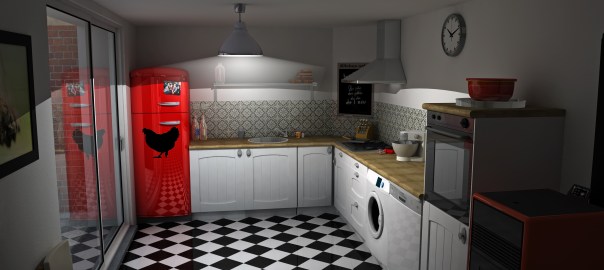

Day #6 – Love Is Cold

Today’s prompt: A refrigerator begins giving unsolicited love advice.

INT. STUDIO:

Two comfortable chairs are set up on a low stage. To the right sits LENA, the host of the show. To the left is TRACY, the person to be interviewed. There’s a live studio audience.

(audience claps as schmaltzy upbeat music plays)

LENA (smiling):

Hey, everyone. Welcome back to the show. So glad you could all make it today because we’ve got an amazing story. We have with us today Tracy (gesturing to Tracy), who says she found her husband in a very unique way. Tracy, can you elaborate on that?

TRACY (shifting in her seat):

I sure can. And hello, Lena. Thanks so much for having me.

LENA:

Of course! So tell us, Tracy, what makes your story unique?

TRACY:

Well, I guess you could technically say that I met my husband with the help of what was once an appliance. My refrigerator.

(audience gasps and murmurs)

LENA (eyes wide open):

Well, the audience certainly wasn’t expecting that, I don’t think!

TRACY:

Nobody ever does. But it’s true.

LENA:

So you must have one of those newer refrigerators because, I’ll tell you what, MY refrigerator just keeps my food cold. It certainly doesn’t talk to me! Does yours do windows too?

(audience laughs in a prompted sort of way)

TRACY:

The refrigerator is a newer model, yes. But I now refer to the refrigerator as  Casanova because I found love through him.

(audience laughs legitimately and starts clapping)

LENA:

Casanova! I just love that! (glancing toward the audience and frowning a little). And it seems my audience does too.

TRACY:

It turns out that Casanova was programmed to inform me when I was running out of something or if an item was rotting or whatever. But then one day, he offered up some advice.

LENA:

Hmmmmmmm, (leaning in and resting the tip of her chin on her thumb). Can you give us an example?

TRACY:

Yeah. Okay. So one morning, he told me that my blueberries were past their prime, right? Then he added, just out of blue, that the men I was dating were past their prime too. Ya know, like, they were too old for me.

LENA:

And were they?

TRACY:

They totally were. But not only did his mentioning that steer me toward more age-appropriate men, but it helped me begin to uncover some crazy daddy issues in therapy!

(audience applauds)

LENA:

Well, that’s great. (glancing at audience again) I can see my audience is really enjoying your story. If you keep this up, you may put me out of work!

(audience laughs in a prompted way)

TRACY:

Sorry! So anyway, on another morning, he told me that the milk had soured in the same way the current man I was dating had soured on me.

LENA (cocking her head):

Well, that’s certainly… compelling.

TRACY:

It was! Especially because I totally didn’t think we were having any problems until Casanova pointed them out. Then they were super obvious. Ya know?

LENA:

I’m not sure I do…

TRACY (interrupting):

But the real clincher was when he told me I’d run out of carrots. In much the same way I’d run out of excuses for not going to the gym and losing twenty pounds.

(audience gasps)

LENA (leaning toward Tracy with concern):

Oh, my. If you don’t mind my saying, you seem very thin to me. That advice feels a bit…

TRACY (interrupting again):

Inspired?

LENA:

Abusive. I was going to say abusive. (Looking over the audience and nodding.) I think my audience agrees.

(audience murmurs, many nodding)

TRACY:

You just don’t know him the way I do. He gets me. If you met him, you’d see that.

(audience guffaws and many start shaking their heads)

LENA (strangely satisfied):

With all due respect, Casanova is a refrigerator.

TRACY:

Well, Lena, he also happens to be my husband. We were married last week. And yes, he actually DOES do windows.

(audience goes wild as Lena dramatically throws a stack of papers into the air)

LENA (shaking her head and turning to the camera):

We’ll be back after this commercial break. If I don’t quit first.

(audience cheers and schmaltzy music is cued as Tracy is ushered off the stage)

Day #5 – Vicious Cycle

Today’s prompt: An accidental proposal at a crowded café.

Daisy watched Jack carefully as he entered the café that afternoon. Nobody in town could argue that Jack wasn’t always teetering in one direction or the other. Nobody who knew him, that is. His Aunt Elouise had heard the term ‘benign eccentricity’ at some point. Maybe stumbled upon it in her readings or heard it on one of those YouTube videos she watched to better educate herself. That’s what she told herself, anyhow. The point is, as soon as she heard the term, she said, “That’s Jack.”

And Elouise knew Jack better than almost anyone. She was the one who’d raised Jack after his mother up and disappeared. Of course, Jack, always the imaginative child, told people his mother had left to join the circus. That she was an accomplished high-wire act. But everyone in town knew that the only true part of that illusion was the word ‘high.’ They did the math from there.

The only person in town who knew Jack better than Elouise was Daisy. She and Jack had been a couple since eighth grade. And that day, when he staggered into the café, it was definitely the most off-kilter she’d seen him. Which was saying a lot. She stood behind the counter, rubbing her hands nervously on her apron. They were red and irritated from washing so much glassware. The café was buzzing, particularly busy as the holiday season approached. Outside, brilliant yellow leaves cascaded from the maple and blanketed the sidewalk. She remembered when she and Jack were children and would play in the leaves that dropped from that tree. The tree was much smaller back then. But then, so were they. The two would imagine themselves to be animals making their way through a magical world of colorful confetti thrown by friendly giants. Daisy would always pretend she was a horse. Always. But Jack chose a different animal each day. And it was always an exotic one. Tuesday he might be a wombat, Wednesday an okapi, then Thursday a Komodo dragon. Jack would insist the giants were throwing a grand party. And there was nothing that Jack liked more than a party. Once they grew too old to be imaginary creatures, Jack’s priorities shifted to finding the next good time.

Daisy had a different definition of a good time. Her abiding love for horses led to an appreciation for all animals. She’d started volunteering at the animal refuge on the edge of town when she was a freshman in high school and had been there ever since. When she wasn’t working at the café, making money in the hopes that she may escape someday, she was with those animals. Jack didn’t always like this.

“Daisy, Daisy, doodle-bug!” he slurred as he approached her at the counter.

She sighed. “What do you want, Jack?”

He stepped back from the counter and gave her an exaggerated pout. “Is that any way to talk to the love of your life?”

She sighed again. It was true. He was the love of her life. If you could call barely surviving in this suffocating little town a life. She noticed the pupils of Jack’s eyes were as huge and black as a cat’s stalking its prey. She couldn’t help but feel she might be his. “You know what I want,” he said, sidling back up the counter and blinking, his countenance now shifted to that of a needy little boy. But not the boy she once knew. “I want you to marry me!” he blurted out.

“No, you don’t,” she said sternly,

“Marry me!” he yelled this time, turning a few heads.

She widened her eyes and clenched her teeth. “You’re being ridiculous again,” she scolded in a harsh whisper. “Cut it out.”

“But I mean it!”

“No,” she began raising her voice, and a few more heads turned in their direction. “You don’t!”

He pouted again. “Why do you keep saying that!?” he whined.

“Because we’ve been here before,” she said, trying to hold back her frustration. “And tomorrow you won’t remember that you accidentally proposed to me. You’ll deny it.”

“I won’t.”

“You will, Jack. You always do. And I’m not doing it anymore. In fact, ya know what?” she asked, taking off her apron and throwing it to the floor. “I’m not doing ANY of this,” she waved around the room, “anymore. I’m done with this stupid, shitty town!”

Jack sat down in a chair and put his head down on a table, and she stared at him. The crowded café had gone quiet. Then he began to laugh. Uproariously. Others joined in, though not entirely sure why they were laughing. And Daisy watched it all through tear-filled eyes.

She knew Jack recognized how preposterous her declaration was. Unlike Jack’s mom, Daisy couldn’t just skip town. Her own mother had recently fallen ill, and she knew she’d need to stay to care for her. She also knew she’d never leave that horrible little town. That she’d someday finally marry Jack out of desperation or boredom and they’d spit out a kid or two.

And that the whole cycle would begin again.