In the late 1400s in a small village in the north of France, there lived two sisters – Madeleine and Mirielle Magnificent. Their father, Marcel, worked in the town’s apothecary and their mother, Maisie, was a laundress. Tickled by the fact that their first names shared a common letter, Maisie and Marcel were delighted when they began to procreate and they could continue the tradition. Aside from their two eldest (Madeleine and Mirielle), there were their three sons Mathieu, Michel, and Morin, and their youngest daughter Monique. Maisie and Marcel thought themselves quite clever. And to their credit, they were. But not for this particular deed. Giving all their children the same initials caused more confusion and headaches than anything else. Still, Marcel and Maisie would go on to do great things.
The same could not be said for their children. This is not for a lack of trying. The six Magnificent children were quite ambitious. There was something about the genetic melding of Maisie and Marcel that made this so. Yet, it also made every last one of them destined to utter failure.
For instance, weak lungs caused both Mathieu and Michel to succumb to pleurisy and eventually pneumonia before they reached adolescence. It was a macabre affair, but not altogether uncommon for the time. Meanwhile, Monique was hopelessly beautiful and knocked up by the time she was 12. She and the baby died in childbirth. Again, not uncommon for the time.
This left Madeleine, Mirielle, and Morin. Because Morin was a male, he should have been worth at least twice as much as his two sisters. But because he was a moron (Morin the Moron, he was dubbed), he was only worth 1.67 times as much as his two sisters. Still, he could gather and chop wood like a champ. He also had an uncanny knack for candle-making. It was, in fact, Morin Magnificent who created the first scented candle. A series of mishaps resulted in it being a cat urine-scented candle, but all great inventors have to start somewhere. Unfortunately, in Morin’s case, that was the end of the exploration. His failure would lead him to die drunk and destitute by the age of 17. Again, not uncommon for the time. The late 1400s were brutal.
Despite all of these missteps, Madeleine and Mirielle continued to thrive. Or live, at least. Which was, as is now clear, saying a lot for the time. What kept them going was their dream. Mad and Mir were determined to write a collection of dark and disturbing stories that they hoped would stand the test of time. And that someday, they would be known as the Sisters Magnificent for their deeply upsetting tales of darkness. There were two problems with this plan. First, dreams are nice but are largely bullshit and don’t come true. Second, the sisters simply had no talent for writing such tales.
“I have an idea!” Mir would exclaim.
“Do tell,” Mad would respond.
“How about a story about a frightful animal that takes over a hamlet?”
Mir would nod. “Like a field mouse with large teeth, perhaps?”
Mad would ponder. “Perhaps. Though I was thinking more along the lines of a soft, tiny, but VERY vicious kitten with an astute capacity for hatred.”
“I like it,” Mir would conclude. “Quite distressing…”
“I too have an idea,” Mad would intercede.
“Pray tell.”
“You sense that some presence has followed you home from picking flowers.”
Mir would raise her eyebrows. “Continue.”
“When you finally come face to face with the presence, it is a large…” Mad would pause here to collect herself while Mir sat on the edge of her splintered wooded seat – because all furniture back then was made from splintered wood.
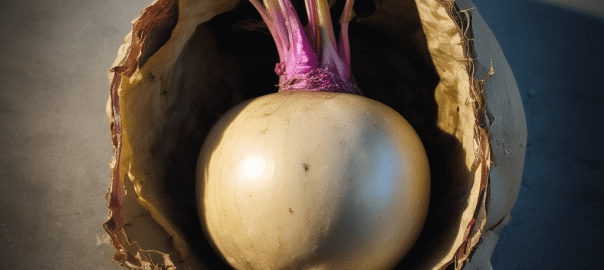
“A large and very unsightly turnip,” Mad would finally reveal, a tremor in her voice.
Mir would gasp for a moment. “I’ve always deemed the turnip the most evil of the tubers.”
“Indeed!”
And so it would go on like that for months and then years . They would furiously write their ideas and formulate tales that were not only not scary, but unintentionally amusing. As such, their stories would never receive the attention nor notoriety they’d anticipated. And as they proceeded through their lives driven by such devastating meaninglessness, they became increasingly discouraged. By the time they’d become wisened elders at the age of 24 and 25, they decided that the masses were too illiterate to grasp their brilliance and in an ironic twist of fate that demonstrated a true horror story, they became nuns. The Catholic kind, no less.
Meanwhile, during all the many years that their children tried and repeatedly failed in the most epic of ways, Marcel and Maisie thrived. They rescued sick animals, fed the hungry, pulled children from fires, and found the cure for a little-known disease in the north of France that caused its victims to sprout a second set of hands that would choke them to death. (Yes, they had suggested that Mad and Mir write a story about that, but the girls felt it was too “jejune” a topic.) As such, when Marcel and Maisie both died in their sleep on the same night at the age of 65, the country of France adopted their surname to mean “doing great deeds.”
Two years after the death of their parents, Mir and Mad would expire in a freak bell-ringing accident at the convent. They would never come to be known as the Sisters Magnificent and their name wouldn’t go on to mean something horrifying or sinister. They couldn’t help but wonder during those two years if they’d been too lofty in their goal. That they’d done it backwards. Perhaps if they’d been born Gabrielle and Gwendoline Grimm, things would have been easier.
Probably not though.


 Cornfed Mindfulness Writing and Life Coaching