Monthly Archives: August 2024

#50 – Popping a Green Balloon

My latest therapist seems certain that he (and he alone) is going to figure me out. It’s precious.

Trevor is his name. Trevor Deukmejian. 

I call him Duke. I asked him if it was okay – that I gave him that nickname. I don’t wish to be disrespectful to my therapist, after all. Let’s just say that Duke didn’t demure. Not exactly. I did sense some reluctance though. And yeah, that apprehension stirred something in me.

Young guy. British mother. Armenian father. Very likely bullied on the playground as a child. 

I learned the origins of his parents from him during our first session. “So, tell me a bit about your childhood,” he’d said. “What were your parents like?”

Ech. Cliché. Is this what they teach all these guys in therapist school? I’d thought. 

I’d leaned back deeper into the cushion on the couch. It didn’t have much give. I daresay it may have even been resisting me. Fuck you, couch. “My parents?”

Trevor had nodded.

“What can I say?” I’d shrugged. “Normal, I suppose,” I’d said, attempting to smile while thinking distant, moronic, useless, occasionally cruel. I’d then glanced at the nameplate on his desk. It looked like a VERY recent graduation gift.

“Interesting name,” I’d said nodding toward the nameplate, at which point he revealed his roots. It was a rookie move. And one, it only somewhat saddens me to say, that I was later able to use against him. 

Meanwhile, that he was bullied on the playground was purely my dime-store analysis. But I’m always right about such things. Most things, really.

Today’s session is our eighth and I do have to hand it to Trevor. The playground wimp has not broken under my cleverness and fortitude. Usually by now, they do. Even the most experienced among them have; those with their lavishly furnished offices, fancy degrees, and parade of letters behind their names. Never, I must say, has there been a duller parade.

Trevor opens his office door and a squirrelly middle-aged woman exits. She glances up at me for a moment, then averts her gaze. Not quickly enough for me to ignore that her eyes are rimmed in red and her face puffy. I pretend I don’t see her and instead look at a framed piece of horrifically awful artwork in the waiting room. Her ruddy swollen face brings to mind those red rubberheads you squeeze for stress relief and their eyes pop out. I’m trying to resist my urge to laugh.

“Hey there, Duke,” I say to Trevor as the woman passes. 

Trevor watches the rubberhead lady leaving and I wonder if he’s reminded of the same thing but professionalism dictates that he must not show it.

“Please, come in,” he says. 

“That’s quite a piece of art,” I say as I enter his office, glancing over my shoulder at the rectangular mess in the waiting area. As Trevor shuts the door behind me, the couch cruelly beckons me. I walk over to the chair instead, subtly flipping the bird at the couch.  

“One of my patients made that,” he says. “Part of her art therapy.”

“Ooooooh, I gotcha,” I say. I’m thinking he must be required to hang this tripe on his wall as some sort of advertisement and is ashamed of how insultingly bad it is. “Clearly, no one has given her crayons, scissors, or glue sticks since she was in kindergarten,” I say, laughing. “Am I right?”

Trevor sits in his seat. “Tell me what’s happening,” he says.

“Oh,” I’m taken somewhat aback at the coolness of his demeanor. “I see we’re getting right to business today, Duke.”

“Well,” he says thoughtfully, “this is the eighth session of the fifteen that the court has appointed. And I’m not sure we’re getting anywhere.”

I lean forward in my chair and look him directly in the eyes. “How does that make you feel?”

He sighs. “I know what you’re doing,” he says, shaking his head. 

“Do you?” 

“I do.”

See. He thinks he’s figured me out.

“So then you know,” I begin, letting each word eke out like strangely deformed puppies from a very pregnant dog, “that I’m starting to feel the urge again.”

“Hmmmmmmm.” Try as he might, Trevor’s eyes cannot betray a subtle spark of interest. “I did not know that.”

“Oh, yeah,” I say, eyes widening.

“So when did that start?” He’s attempting to stay blasé but his greenness has not allowed him the tools to hone this skill yet.

I shrug. “A few days ago, I suppose,” I say.

“And have you acted on it?”

“I have,” I smile.

Trevor is starting to believe me. I see it in his face and he leans forward and takes a deep breath. He releases an exhale and squints his eyes at me. “Can you tell me what happened?”

“I can,” I say. “I went to the aquarium.”

He takes another deep breath. “And what did you do there?”

“Have you ever heard of the parrotfish?”

“No.”

“I hadn’t either. But a friend of mine who’s spent a fair amount of time in a variety of southeast Asian countries said that the flesh of the beaked parrotfish tastes remarkably like lobster.”

“Okay,” he says with some trepidation.

“So I thought it only right that I test this hypothesis.”

Trevor is now letting evidence of concern seep through the steely demeanor he’s laboring so hard to master.

“I didn’t kill anyone,” I say.

“Okay,” he says, now holding his breath. I’m breaking him.

“No human, at least.”

“Well,” he says, nervousness in his voice, “that’s something.” Every time I notice him becoming more panicky, I find it makes me calmer. Until at last, there he is. The child on the playground wearing the wrong shoes, sporting the wrong haircut, trying so goddam hard to be funny and cool like the other boys and failing at every step.

“So I took a sledgehammer and smashed the tropical fish tank!” I say with great bluster and a hearty laugh. Then I become very calm. “It turns out that parrotfish does NOT taste like lobster.” 

Trevor sinks back into his chair. He’s been taken. And he looks as defeated and deflated as an escaped balloon flattened on the road by a truck. I’m the truck, in case you didn’t get the analogy. And just when he thought he was figuring me out. 

So precious, that Duke.

Because the thing is, there is no urge. There has never been an urge. Or a mild compulsion. Not even an inclination. Instead, I have only these ideas and notions that swirl haphazardly around me like naughty children. Or mosquitos. Neither of which can be annihilated. 

Even now, as I sit here with Trevor “Duke” Deukmejian, several new ideas detonate inside of me. 

#49 – So Wonderful

At one time in her life, there seemed nothing but possibilities for Amelia Auerbach. Of course, that was one of the (overwhelmingly abundant) benefits of youth. At that point, she had no practical grasp of how those rosy possibilities would wither and fall off the vine, only to be replaced by thornier impossibilities. But… that’s the way cookie crumbles, her mother always said. 

She wasn’t entirely willing to accept such crumbling.

Amelia’s mother had died in the eighth decade of her life at the age of 77. As did her grandmother. So she felt certain the same was going to happen to her. That meant that time was running out for her to achieve her lifelong goal. Which explained why she was now in this courtroom.

“And how do you plead?” asked the judge.

“Oh, I’m guilty alright,” she responded with a smile. 

“A simple ‘guilty’ would suffice.”

“Sorry, your Honor.”

The judge, a stodgy grey-haired man with craggy features that would be better suited to a cliffside, looked at her over his thick-lensed glasses. She knew he was trying to figure her out. Everyone tried to figure her out. And nearly everyone failed. Especially the women who came in and out of her life.

“I don’t think they’re really trying all that hard though,” she’d said through sniffly adolescent tears to her mother back when she was lamenting that the girls in her sophomore class expressed no interest in being her friend. 

“Well, if they can’t see how wonderful you are, then they just aren’t worth it,” was her mother’s response. At the time, Amelia was somewhat dubious. 

Ten years later, she shared this sentiment with her mother. Again. Through tears. Again. And in the kitchen of her childhood home. Where she still lived. She was working in the ad business and trying to save money to get a place of her own. Yet while she was making progress in that department, she couldn’t seem to make any headway in establishing a group of women friends at the agency. 

“Well, if they can’t see how wonderful you are, then they just aren’t worth it,” was her mother’s response. Again. And Amelia, having heard this so many times by then, was no longer dubious. After all, her mother was her biggest fan.

There were times though, as she got older, when she questioned whether it was odd that her mother was her biggest fan. She knew there were certainly worse fates than having a mother who loved her too much. It had to be better than not being loved enough. Or neglected. Still, she sometimes suspected that her mother may have given her an inaccurate representation of how wonderful she was. Even so, Amelia went on to do the same thing with her daughter Pamela. It was an occupational hazard of parenting. The difference was, Pamela would go on to resent Amelia for it.

“And I’ll be damned if I’m going to do the same thing to my daughter,” Pamela said of Amelia’s granddaughter, Zelda.

“Good for you! Stand your ground!” Amelia had said to Pamela, who then walked off in a huff leaving Amelia behind baffled and clueless.

“Why do you want a group of female friends anyhow?” asked Harlan; her closest friend and a member of the small group of male friends she met every morning for coffee.

It was a good question. And one he asked on numerous occasions.

Amelia didn’t particularly like women. Especially groups of women. She felt this was an embarrassingly anti-feminist stance and was trying to change it. Yet, she was clueless about where to start. She DID like groups of Black women. That much she knew. They interacted with each other in a way she found more genuine than their white counterparts. And let’s face it – they were a lot more fun. But she knew she had no chance of ever being part of that exclusive club. Aside from being shy, reserved, and lacking in confidence, she was a pale shade of white that made her reflective in the sun.

“I don’t even know that I do. I think I’m supposed to want to have a group of female friends,” was her typical response. Or some variation of it. 

“The way I see it, you either want something or you don’t,” was his typical response. Or some variation of it.

In every variation, she was left befuddled. Why was this so difficult? 

It wasn’t that she was especially fond of men. She did find them, well, painfully male at times. But since elementary school, it was always the boys and then later the men who welcomed her into their groups. Yes, on some occasions there were ulterior motives. For the most part, however, she found their company less exhausting than that of women. She rarely worried that she’d say something wrong, don the improper garment, or be the topic of condemning conversation behind her back. Sure, they could be dull and insensitive and oblivious and stupid. But they weren’t mean. (Not the straight ones, at least.) 

“It’s possible that the ‘group of women friends’ ship may have sailed,” Harlan said to her a few months previous. Feeling particularly vulnerable that day, she was still unsure that she agreed.

“What makes you say that?”

He’d shrugged. “You’re pushing 70, Meal. And it hasn’t happened yet. So maybe it’s okay.”

“I don’t want to let my mom down though,” Amelia said. Her voice was a little smaller and seemed to have crawled up from some dark forgotten space.  

Harlan stared straight at her, brow cocked. “With all due respect, that’s not possible.”

Amelia squirmed a little. “But she always said that I could do anything that I wanted to do.”

“Well, she lied.”

“Harlan!”

“I’m not being flippant. And I don’t think she meant to lead you astray. I really don’t. I’m sure she thought she was helping you by saying that,” he said, placing his hand on her arm. “But at the end of the day, that phrase is a line of bullshit that parents feed their children when they themselves don’t want to look, and I mean really look, at their kid as flawed. You know. You have a kid.”

Amelia sighed. She suspected he was right. But how had her mother succeeded in making her feel that she was so special So… perfect? Maybe I really am truly wonderful, she thought for a moment. And it’s just that nobodys had an opportunity to recognize it. Yet .

“My advice?” 

Amelia leaned in.

“Prison,” Harlan said with a glimmer in his eye and a smile. He was kidding, of course. 

But that single word shot through her frontal lobe like a railroad tie in true Phineas Gage fashion. In that moment, her world changed. 

Prison! It made perfect sense! She’d seen the movies. Women in prison were like a big family. They looked out for one another. Harlan was brilliant. How had she not considered this? It was the ultimate sisterhood!!! Plus, the women there didn’t have an escape. One of the groups would have to take her. It may not be an ideal start, but once they got to know her, they’d see how truly special she is. 

So as she stood in that courtroom facing that disapproving judge (who, if she was being honest, reminded her a little of her father), she was the proudest and most hopeful she’d ever been. At the age of 69, she’d committed the perfect crime. It was severe enough to land her a fifteen-year sentence – only eight of which, by her calculation, she would end up serving before she died. And she would at long last have a group of women friends holding her hand and standing over her as she exited her mortal coil. It was going to be great. 

They’d have see how wonderful she was. 

#48 – The Sisters Magnificent

In the late 1400s in a small village in the north of France, there lived two sisters – Madeleine and Mirielle Magnificent. Their father, Marcel, worked in the town’s apothecary and their mother, Maisie, was a laundress. Tickled by the fact that their first names shared a common letter, Maisie and Marcel were delighted when they began to procreate and they could continue the tradition. Aside from their two eldest (Madeleine and Mirielle), there were their three sons Mathieu, Michel, and Morin, and their youngest daughter Monique. Maisie and Marcel thought themselves quite clever. And to their credit, they were. But not for this particular deed. Giving all their children the same initials caused more confusion and headaches than anything else. Still, Marcel and Maisie would go on to do great things. 

The same could not be said for their children. This is not for a lack of trying. The six Magnificent children were quite ambitious. There was something about the genetic melding of Maisie and Marcel that made this so. Yet, it also made every last one of them destined to utter failure. 

For instance, weak lungs caused both Mathieu and Michel to succumb to pleurisy and eventually pneumonia before they reached adolescence. It was a macabre affair, but not altogether uncommon for the time. Meanwhile, Monique was hopelessly beautiful and knocked up by the time she was 12. She and the baby died in childbirth. Again, not uncommon for the time. 

This left Madeleine, Mirielle, and Morin. Because Morin was a male, he should have been worth at least twice as much as his two sisters. But because he was a moron (Morin the Moron, he was dubbed), he was only worth 1.67 times as much as his two sisters. Still, he could gather and chop wood like a champ. He also had an uncanny knack for candle-making. It was, in fact, Morin Magnificent who created the first scented candle. A series of mishaps resulted in it being a cat urine-scented candle, but all great inventors have to start somewhere. Unfortunately, in Morin’s case, that was the end of the exploration. His failure would lead him to die drunk and destitute by the age of 17. Again, not uncommon for the time. The late 1400s were brutal. 

Despite all of these missteps, Madeleine and Mirielle continued to thrive. Or live, at least. Which was, as is now clear, saying a lot for the time. What kept them going was their dream. Mad and Mir were determined to write a collection of dark and disturbing stories that they hoped would stand the test of time. And that someday, they would be known as the Sisters Magnificent for their deeply upsetting tales of darkness. There were two problems with this plan. First, dreams are nice but are largely bullshit and don’t come true. Second, the sisters simply had no talent for writing such tales. 

“I have an idea!” Mir would exclaim.

“Do tell,” Mad would respond.

“How about a story about a frightful animal that takes over a hamlet?”

Mir would nod. “Like a field mouse with large teeth, perhaps?” 

Mad would ponder. “Perhaps. Though I was thinking more along the lines of a soft, tiny, but VERY vicious kitten with an astute capacity for hatred.”

“I like it,” Mir would conclude. “Quite distressing…”

“I too have an idea,” Mad would intercede. 

“Pray tell.”

“You sense that some presence has followed you home from picking flowers.”

Mir would raise her eyebrows. “Continue.”

“When you finally come face to face with the presence, it is a large…” Mad would pause here to collect herself while Mir sat on the edge of her splintered wooded seat – because all furniture back then was made from splintered wood.

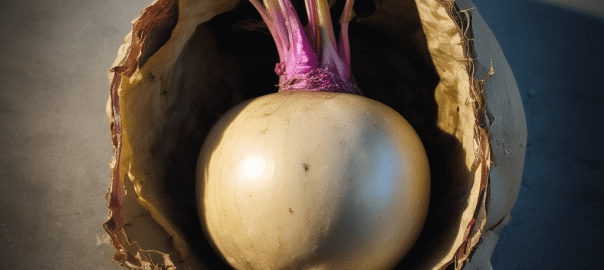
“A large and very unsightly turnip,” Mad would finally reveal, a tremor in her voice.

Mir would gasp for a moment. “I’ve always deemed the turnip the most evil of the tubers.” 

“Indeed!” 

And so it would go on like that for months and then years . They would furiously write their ideas and formulate tales that were not only not scary, but unintentionally amusing. As such, their stories would never receive the attention nor notoriety they’d anticipated. And as they proceeded through their lives driven by such devastating meaninglessness, they became increasingly discouraged. By the time they’d become wisened elders at the age of 24 and 25, they decided that the masses were too illiterate to grasp their brilliance and in an ironic twist of fate that demonstrated a true horror story, they became nuns. The Catholic kind, no less.

Meanwhile, during all the many years that their children tried and repeatedly failed in the most epic of ways, Marcel and Maisie thrived. They rescued sick animals, fed the hungry, pulled children from fires, and found the cure for a little-known disease in the north of France that caused its victims to sprout a second set of hands that would choke them to death. (Yes, they had suggested that Mad and Mir write a story about that, but the girls felt it was too “jejune” a topic.) As such, when Marcel and Maisie both died in their sleep on the same night at the age of 65, the country of France adopted their surname to mean “doing great deeds.” 

Two years after the death of their parents, Mir and Mad would expire in a freak bell-ringing accident at the convent. They would never come to be known as the Sisters Magnificent and their name wouldn’t go on to mean something horrifying or sinister. They couldn’t help but wonder during those two years if they’d been too lofty in their goal. That they’d done it backwards. Perhaps if they’d been born Gabrielle and Gwendoline Grimm, things would have been easier. 

Probably not though.